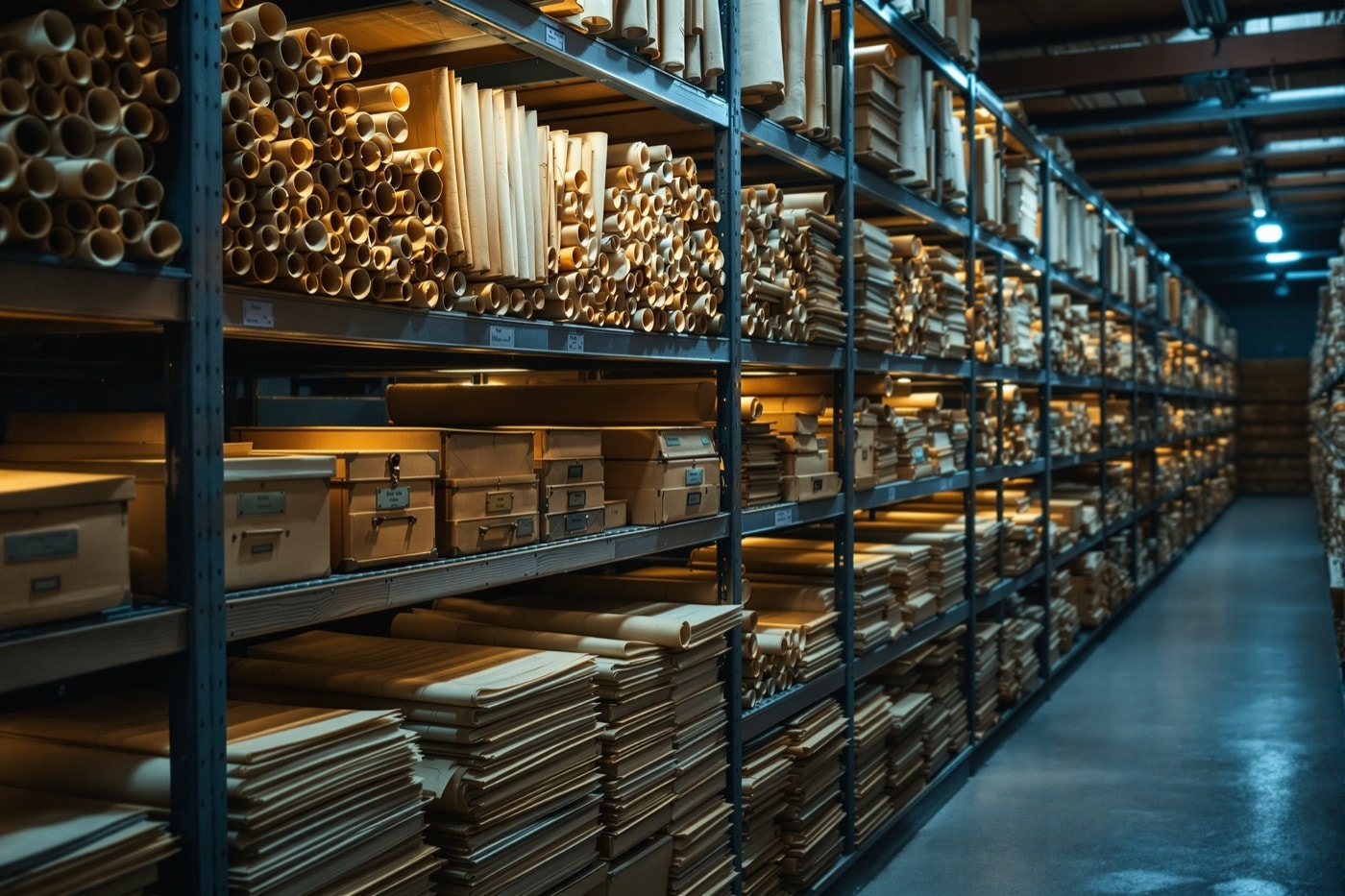
If the National Library preserves what Bolivia printed, the National Archive preserves what it governed. Together they form the ABNB, but the archive deserves attention in its own right: it holds the administrative and judicial record of nearly five centuries, from the Spanish colonial high court to the modern republic.
Origins in the Nineteenth Century
The National Archive was established by an act of 18 October 1883, during the government of General Narciso Campero, which declared the creation of a general archive of the nation. Its purpose was to consolidate the scattered records of colonial and early republican administration into a single, protected repository — a task that continues to this day as older documents are located, catalogued, and conserved.
The Colonial Funds
The archive's most celebrated holdings are its colonial funds, above all the records of the Audiencia de La Plata (also known as the Audiencia de Charcas), the Spanish high court that administered a vast territory from the city now called Sucre. These records span the years 1561 to 1825 and document the legal, fiscal, and social life of the colonial Andes across more than two and a half centuries.
Complementing them are the records of the Cabildo of Potosí and the deeds associated with the silver of Potosí (1549–1825) — the mountain of silver whose wealth flowed across the Atlantic and helped finance the Spanish empire. For anyone studying the economic history of the colonial world, these are documents of the first importance.
Republican and Later Records
Beyond the colonial period, the archive protects documentation generated by the executive branch and other public institutions of the republic. In total it safeguards several thousand linear meters of archival material spanning roughly 1549 to 2000, together with private collections that add further depth. The recovery and conservation of this heritage is one of the institution's primary objectives.
Why the Audiencia Records Matter
The significance of the Audiencia de La Plata collection is not merely local. It offers an almost unbroken window into how a colonial society actually functioned — its lawsuits and land grants, its taxes and testimonies — and it does so with a completeness that is rare in the Americas. That is why the collection has been recognized by UNESCO's Memory of the World Programme, described on our Memory of the World page. The UNESCO programme reserves such recognition for documentary heritage of world significance.
Access and Research
Archival research everywhere follows procedures designed to protect fragile originals: registration, supervised consultation, and, increasingly, the use of digital surrogates in place of the originals. Scholars planning to work with these funds should arrange access directly with the institution and consult its published guidance. This independent guide summarizes the archive's importance but is not a substitute for the institution's own reference services; see our visiting page for how to reach the official body.